What makes good integrated management software?
Integrated management software connects shared data, clear references to the standards and verifiable AI suggestions. What that means in daily work.

Philipp Kappe
Founder of IMScollect
Contents
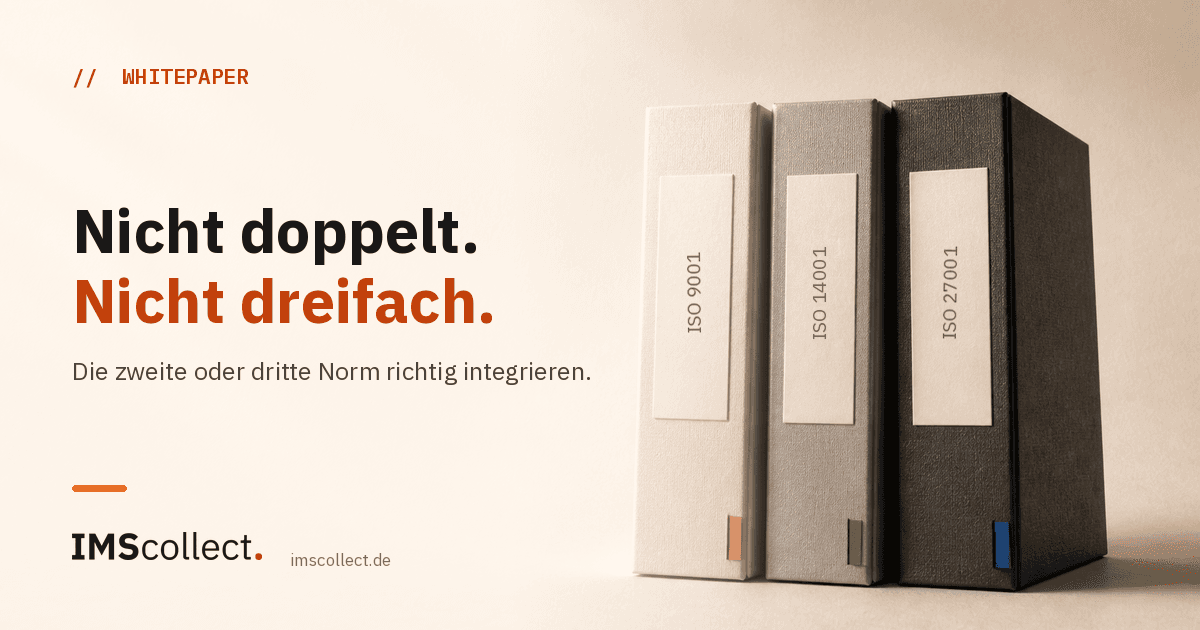
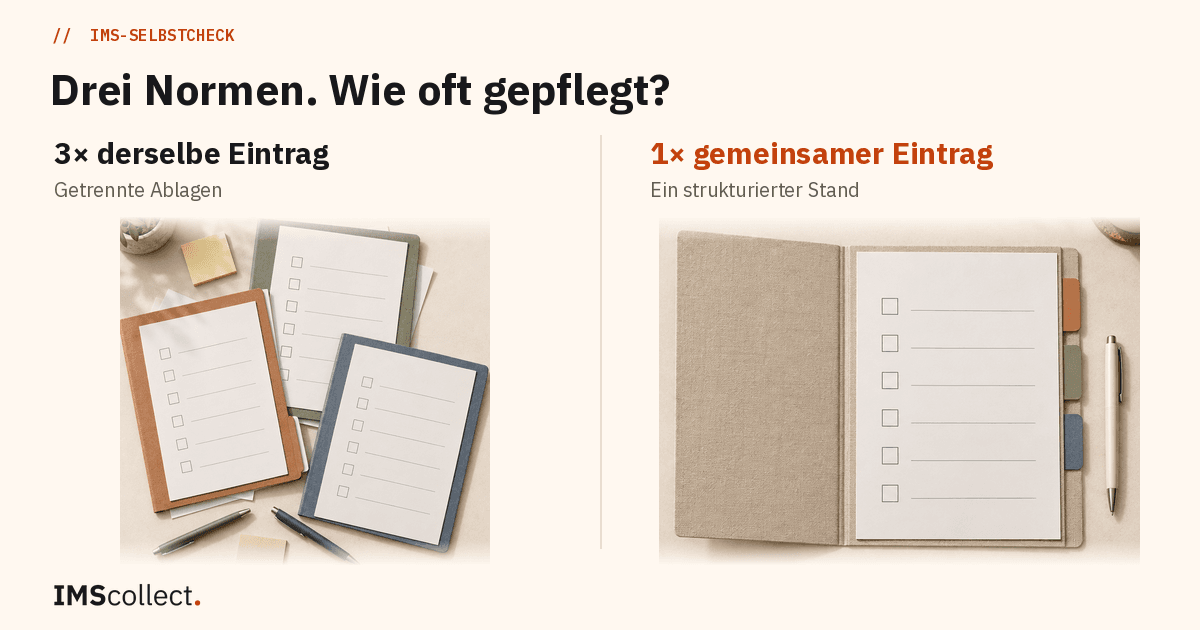
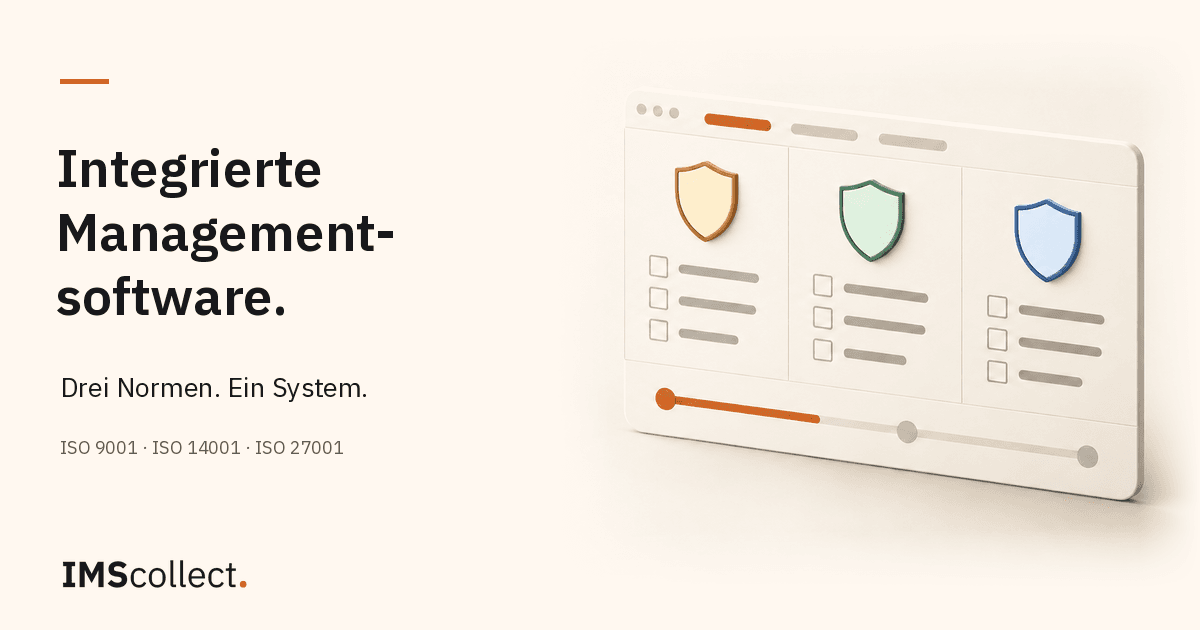
Three standards, three repositories, three different lists for the same action: this is how a management system quickly turns into an administrative chore. Integrated management software brings the shared work on quality, environment and information security together in one application. Processes, responsibilities and actions are linked; the subject-specific requirements of the individual standards remain distinguishable.
What “integrated” means for software
An integrated management system connects processes and responsibilities for several sets of rules. ISO describes an approach for this in which several management system standards are operated in one coherent system; many standards share a harmonised structure. The software is the working tool for this, not the management system itself.
A concrete test: in the audit, it emerges that an important supplier evaluation is missing. The same supplier can be relevant to product quality, environmental impacts and information security. The organisation should not have to maintain it three times as an isolated record. Nevertheless, different evaluation questions are needed: Does it deliver the agreed quality? Which environment-related requirements are relevant to its service? Does it have access to information that needs protection? A shared master record does not replace these evaluations.
A shared record is only useful if the subject-specific assignment, the responsibility and the processing status remain visible.
This is what sets it apart from a shared file repository. There, documents sit in the same place, but a finding, its action and the later evidence of effectiveness are often connected only in the minds of those involved.
What the software should connect in daily work
| Shared work | What must remain distinguishable |
|---|---|
| A process with a responsible person, version and change history | Which requirements of the individual standards the process actually covers |
| A supplier master record with linked evaluations | Quality criteria, environment-related aspects and information security risks |
| An action with deadline, responsible people and status | The respective trigger, the requirements affected and the evidence of their effectiveness |
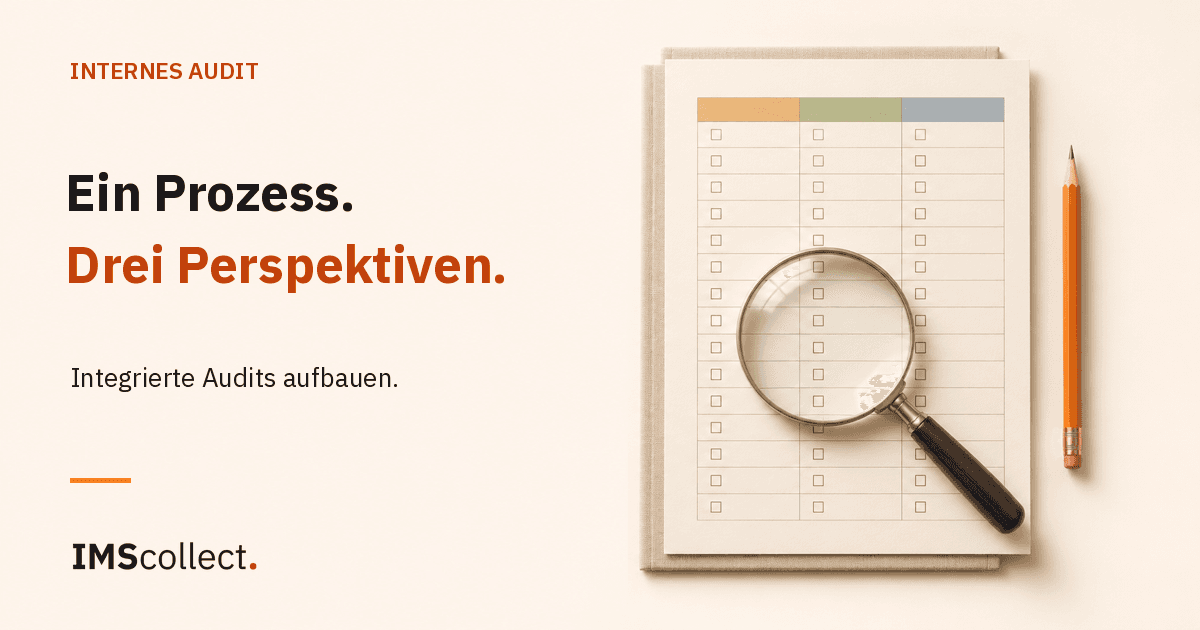
| An audit programme and a shared overview of findings | Audit subjects and results per standard, even when dates are combined |
The different purposes of the standards help with the classification: ISO 9001:2026 deals with quality management, ISO 14001:2026 with environmental management and ISO/IEC 27001:2022 with information security management. A shared structure does not mean subject-matter equality. If you want to know which requirements of the three standards can be managed jointly and where separation remains, you will find an in-depth classification there.
In practice, this means: an entry needs recognisable references. Where did the finding come from? Which action was decided? Who implemented it? What proves the implementation and how was its effect assessed later? “Done” must not stand for processed, approved and effective all at once. A separate example shows how a shared process overview for three standards can be structured.
What an AI advisor can take on
The tedious part of the work often begins before the decision: searching for scattered information, spotting open items, summarising the status of a clause in plain terms or drafting a first action from a finding. Without a connection to the management system, a chatbot lacks the current entries and how they relate to each other. An integrated AI advisor can help with the data that is accessible to the person concerned. For modern management software, this is a sensible expectation for easing everyday work, not an additional ISO requirement.
At IMScollect, this advisor is called Conni. Depending on activation and permissions, it can explain requirements, read existing entries and show the status of clauses and open items. For supported areas, it can prepare changes as verifiable suggestions. Example: for a risk without an assigned action, Conni points out the gap and suggests a next step. The responsible person reviews the content, adjusts it if necessary and only then accepts it. Conni does not change entries on its own authority.
This limit is intentional. Whether a risk is acceptable, an action actually works or evidence is sufficient for an audit is not decided by an automatically worded answer. Approvals and other sensitive decisions also remain with authorised people. Good software therefore shows the origin of an AI suggestion, the existing status and the possible change, instead of turning a fluently written sentence into a binding decision.
How to recognise sham integration
An interface with three tabs for the standards can still contain three separate systems. For a product demo, a few hands-on steps say more than a long list of features:
- Choose a real case, such as a supplier deviation, and follow it through to the action and its evidence.
- Check whether the same case can be assigned to several matching requirements of the standards without mixing subject-specific evaluations.
- Log in as a role with restricted rights: does the person see only the data released for them, in the AI advisor too?
- Have an AI suggestion created and check what is visible and editable before accepting it.
- Ask how the software distinguishes between open, implemented, evidenced, approved and checked for effectiveness.
The shared data set should avoid duplicate maintenance and at the same time make visible what is open, where evidence is missing and who has to decide. A green status alone does not answer these questions. Nor can software guarantee the actual implementation of an action, its effectiveness or a successful certification.
Conclusion
Integrated management software connects work, not just clauses of standards. Shared entries, clear subject-specific references and traceable decisions belong together. An AI advisor can take over research and preparation, but cannot take on responsibility. IMScollect connects the work on ISO 9001, 14001 and 27001 with Conni as a verifiable assistant; a demo lets you follow the process using a specific case.
Frequently asked questions
What is integrated management software?▾
It connects shared processes, entries and responsibilities for several management system standards. The subject-specific requirements, evaluations and evidence of each standard remain distinguishable.
Is a shared document repository enough as integrated management software?▾
No. A shared repository makes things easier to find, but does not automatically link requirements, actions, responsible people, evidence and their processing status.
Can AI maintain an integrated management system by itself?▾
An AI advisor can evaluate information it is authorised to access, show gaps and suggest changes for supported areas. Subject-matter review, approval and responsibility remain with people.
Can software for ISO 9001, ISO 14001 and ISO 27001 use the same evidence?▾
A piece of evidence can be relevant to several requirements. Whether it is sufficient in each case must be checked against the specific requirement and its content; the same assignment is not automatic proof of conformity.