Integrated management: what ISO 9001, 14001 and 27001 share
This white paper shows which processes ISO 9001, 14001 and 27001 share, what stays separate and how the second standard can be planned.

Philipp Kappe
Founder of IMScollect
Contents
Before taking on a second ISO standard, many companies find themselves caught between two bad extremes: either the new standard is supposed to run “on the side”, or a completely separate system emerges. An integrated management system takes the robust middle path: shared leadership and support processes, but clearly separated subject-specific requirements.
This white paper shows, clause by clause, which parts of ISO 9001:2026, ISO 14001:2026 and ISO 27001:2022 can be managed jointly, where the boundary lies and how the second or third standard can be prepared over twelve months.
The short answer
The three standards follow a harmonised structure. That is why many organisational questions can be answered in one shared process:
- Context of the organisation and interested parties
- Policy, roles and responsibilities
- Objectives and action tracking
- Competence, communication and documented information
- Internal audits and management review
- Nonconformities, corrective action and improvement
Managed jointly does not mean identical in content. ISO 9001:2026 looks at quality and process performance, ISO 14001:2026 at environmental aspects and compliance obligations, ISO 27001:2022 at information security risks and the controls derived from them.
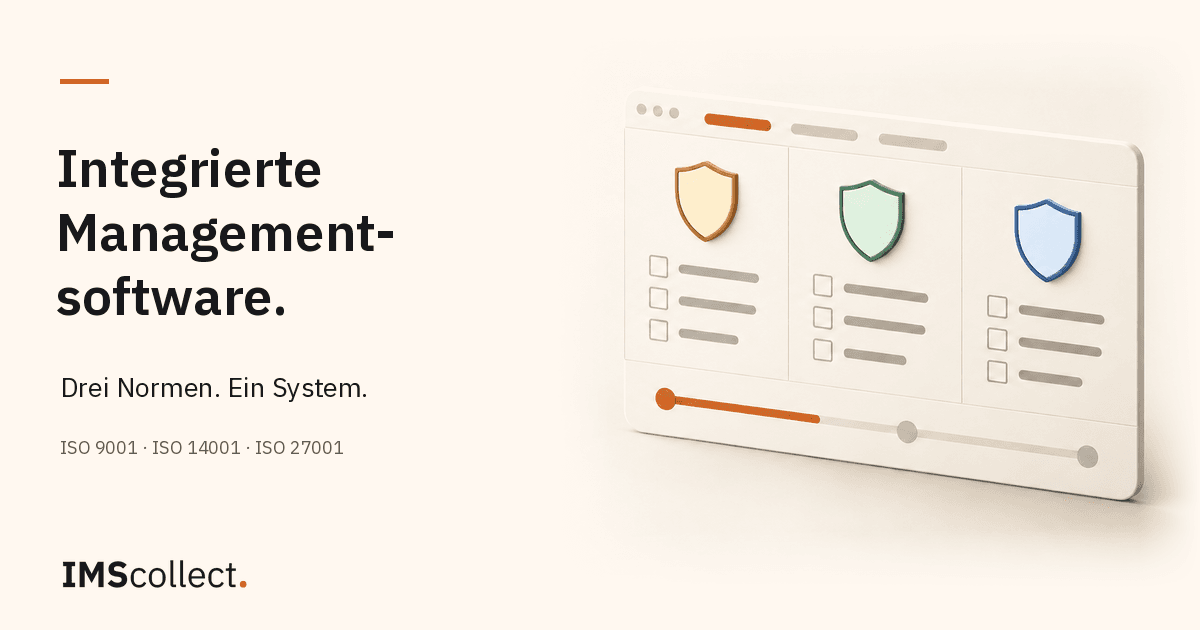
The workable solution is therefore: one shared organisational foundation, several subject-specific cores.
Where integration works
Clauses 4 to 7 as well as 9 and 10 lend themselves particularly well to shared processes. A company does not need, for example, three independent document control processes, competence matrices or management reviews.
An integrated structure can instead:
- record a matter only once,
- assign it to the areas of the standards concerned,
- keep subject-specific responsibilities separate,
- track actions and evidence jointly,
- make the reference to the standard clearly visible in the audit.
This also applies to the 2024 climate amendment in clauses 4.1 and 4.2. Its relevance is assessed in one shared context process; the effects may differ for each standard.
Where separation must remain
Clause 8 contains the operational core of each standard. Here the tasks differ significantly:
- ISO 9001:2026 deals, among other things, with planning and delivering products and services.
- ISO 14001:2026 focuses on operational environmental control, the life cycle perspective and emergency preparedness.
- ISO 27001:2022 is about information security risk assessment, risk treatment and the defined security controls.
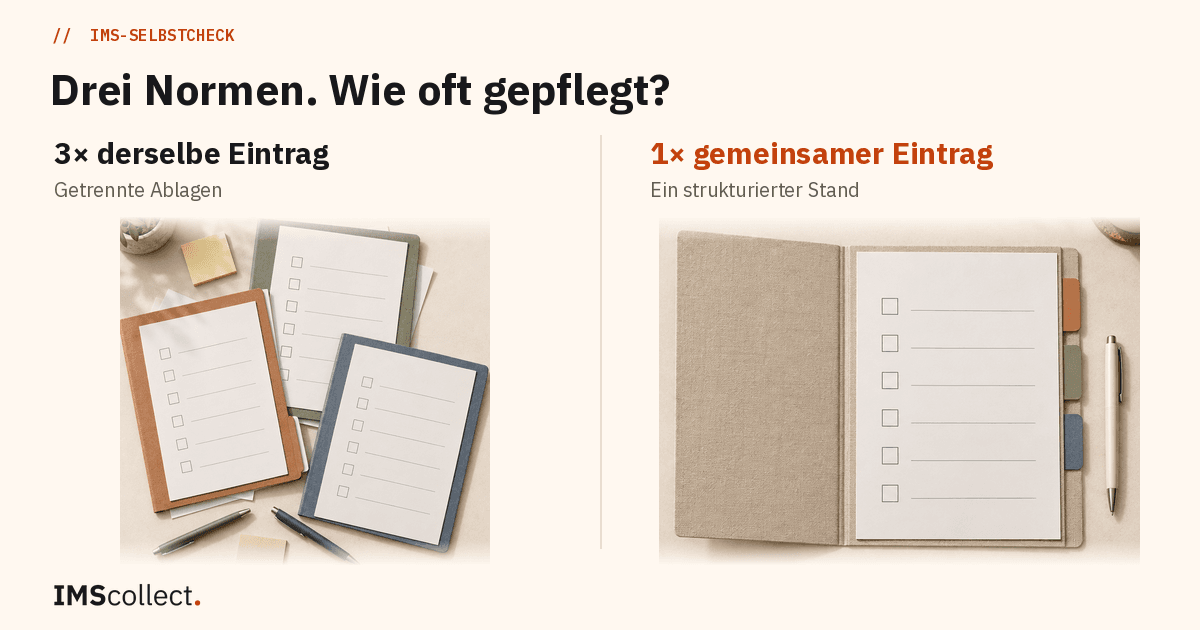
The procedures may be linked to one another. Their criteria, subject-matter responsibility and evidence must nevertheless remain distinguishable. A shared user interface alone is not yet integration.
The test question against sham integration
One question reveals the quality of the structure:
Would the shared process still work if another standard were added tomorrow, without a parallel process having to be copied for it?
If the answer is yes and the subject-specific requirements can still be clearly evidenced, the integration holds. If every new standard brings another list, another audit programme and an additional management review, several systems are merely sitting side by side.
What the white paper covers in full
The public page provides the basic decision. The white paper adds the complete basis for working and deciding:
- Shareability matrix for clauses 4 to 10 of the standards
- Classification of external and internal effort
- Decision aid for the order of the standards
- Twelve-month roadmap in four phases
- Typical causes of sham integration
- Ten questions before commissioning
- Self-test on how well the existing system can be integrated
For practical implementation, the knowledge pages on ISO 9001:2026, ISO 14001:2026 and ISO 27001:2022 help with the subject-specific distinctions.
Which standard should come first?
There is no universally valid order. ISO 9001:2026 is often a sensible starting point if no formal management system exists yet and processes, responsibilities and improvement routines need to be stabilised first.
The specific trigger can, however, override this order. Contractual security requirements can make ISO 27001:2022 the priority. Environmental requirements set by authorities, permits or significant environmental aspects can make ISO 14001:2026 necessary first.
Introducing two standards at the same time only makes sense if robust processes, clear responsibilities and sufficient internal capacity are already in place. Otherwise the strain of running both at once grows faster than the benefit of integration.
Conclusion
An integrated management system does not save work by making differences disappear. It saves work because shared organisational questions are answered only once and the subject-specific differences can still be cleanly evidenced.
Before the second or third standard, no new world of documents should therefore be built. The better starting point is a delta review: what already works, what needs to be added and where is a separate subject-specific process deliberately needed? IMScollect is designed to manage shared requirements, actions, evidence and audits once while keeping their reference to the standard visible.
Frequently asked questions
Can ISO 9001, ISO 14001 and ISO 27001 be run in one management system?▾
Yes. Shared leadership, support and evaluation processes can be integrated. The subject-specific requirements and evidence of the individual standards must nevertheless remain clearly identifiable.
Which processes can be shared between the three ISO standards?▾
Typical shared processes are context analysis, policy, objectives, competence management, document control, internal audits, management review and corrective action.
Why does clause 8 remain largely specific to each standard?▾
Clause 8 contains the operational subject-matter core. Product and service quality, environmental control and information security risk treatment pursue different purposes and need their own criteria.
Should ISO 9001 always be introduced as the first standard?▾
No. ISO 9001:2026 is often a sensible starting point, but contractual security requirements or environmental requirements set by authorities can make ISO 27001:2022 or ISO 14001:2026 the priority.
Does an integrated management system automatically save audit costs?▾
No. Savings depend on the actual degree of integration, the scope and the certification body. The bigger lever is often less duplicate maintenance and aligned internal processes.
Sources
- ISO/IEC JTCG: Exploring Management System Standards
- ISO and IAF: Climate Change Amendments to ISO Management System Standards
- IAF MD 11:2023 - Audits of Integrated Management Systems
- ISO 9001:2026 - Quality management systems
- ISO 14001:2026 - Environmental management systems
- ISO/IEC 27001:2022 - Information security management systems